


CBCT, or Cone Beam Computed Tomography, is a type of technology and diagnostic tool that has revolutionized the way various scanning protocols are used for different medical procedures. CBCT scans are becoming increasingly popular in fields such as endodontics, temporomandibular joint (TMJ) analysis, airway evaluation, and dental implant planning.
The scans allow for incredibly detailed 3D images to be taken quickly, which can provide invaluable resources for accurate diagnosis and treatment. This cutting-edge scanner provides faster results with less radiation exposure than traditional CT scan systems. Additionally, studies have found an increase in patient satisfaction when CBCT scanning machines are utilized in dentistry due to their convenience and accuracy.
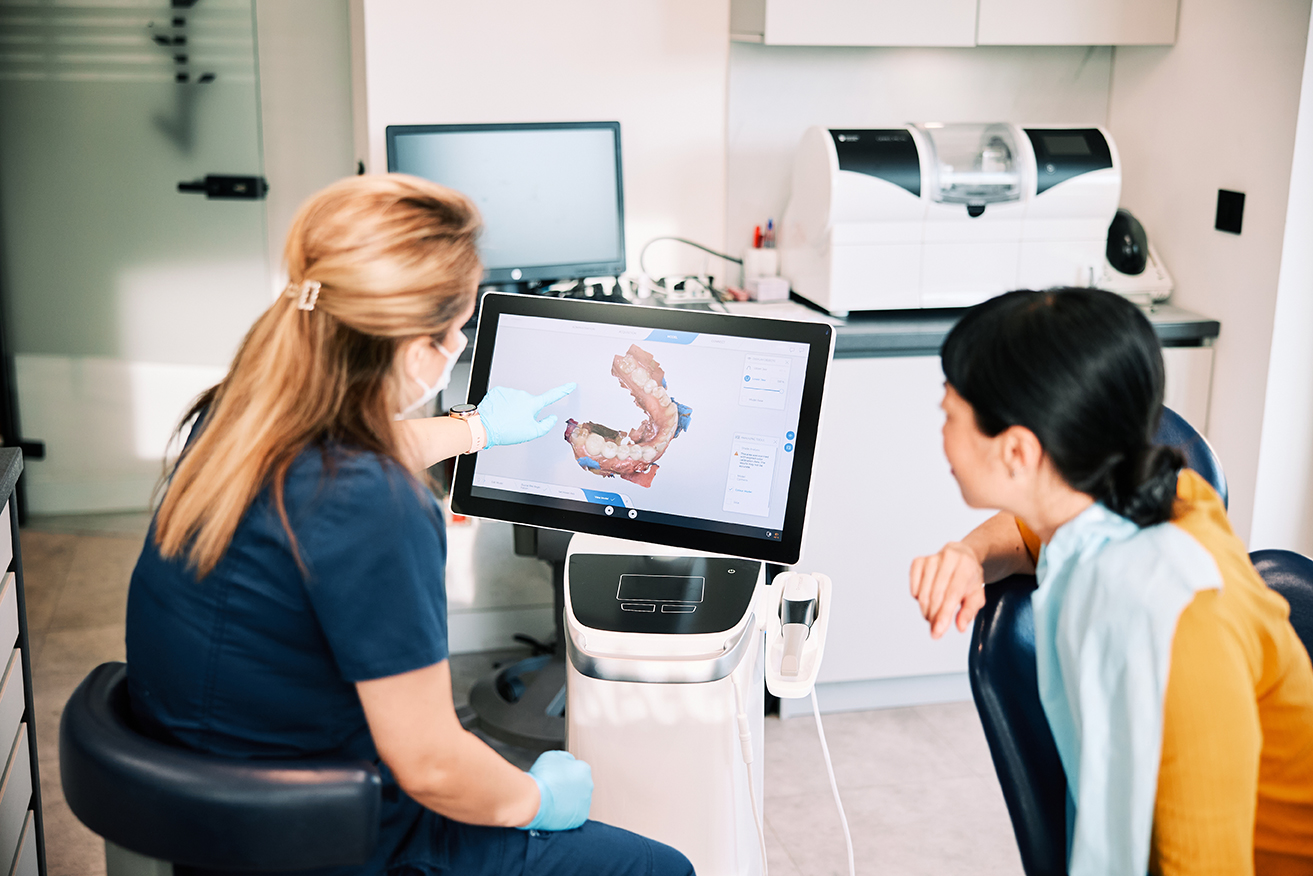


CBCT scans are an important part of many medical diagnoses, as they allow doctors to view detailed images of areas such as the teeth and surrounding structures in patient’s mouths. The procedure is painless, quick, and non-invasive.
During a CBCT face scan a patient will be in a seated position, not enclosed at all so patients do not have to worry about being claustrophobic. Patient’s will also hear some humming noises while the scanner captures images of their mouth area. The entire process typically lasts between a few seconds to a few minutes, depending on the complexity of the images needed.
Afterward, patients can go back to their daily routine without any discomfort and rest assured that their doctor now has an accurate view of what is happening inside their mouth!
A CBCT scan provides incredibly detailed imaging of the teeth and surrounding areas compared to a 2D dental x-ray image. While traditional dental x-rays only show a static image of the hard tissues inside the mouth, a CBCT scan creates intricate 3D images that reveal much more detail. These scans allow dentists to detect and diagnose conditions such as tooth decay, impacted wisdom teeth, fractures, cysts and tumors, as well as all existing dental work like crowns and implants.
The data captured in the 3D images show bone and soft tissue structures in incredible detail in order to provide effective treatment planning for any necessary procedures. A CBCT scan is definitely necessary to ensure the best outcome.